
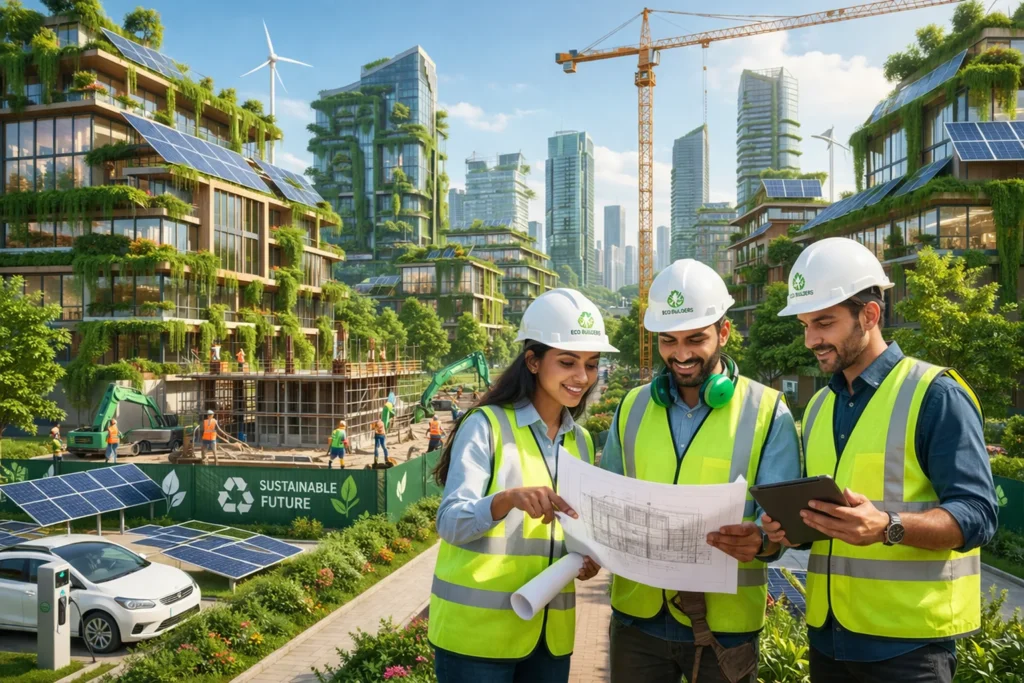
As the world moves toward a greener and more responsible future, the construction industry is undergoing a major transformation. Sustainable construction is no longer just a trend—it has become a necessity. By combining eco-friendly practices with smart engineering solutions, modern infrastructure is becoming more efficient, durable, and environmentally responsible.
Let’s explore how sustainable construction is shaping the future.
1. Use of Eco-Friendly Materials
One of the key aspects of sustainable construction is the use of environmentally friendly materials. These materials reduce the carbon footprint and improve the overall efficiency of buildings.
Examples include:
- Recycled steel and concrete
- Low-carbon cement
- Bamboo and other renewable resources
Using such materials helps conserve natural resources and minimizes environmental impact.
2. Energy-Efficient Building Design
Smart engineering focuses on designing structures that consume less energy while maintaining comfort and functionality.
Key features:
- Proper insulation and ventilation
- Natural lighting optimization
- Energy-efficient HVAC systems
These designs significantly reduce energy consumption and operational costs over time.
3. Integration of Renewable Energy
Modern construction projects are increasingly incorporating renewable energy sources to reduce dependence on traditional power.
Common solutions:
- Solar panels
- Wind energy systems
- Smart energy grids
This not only lowers energy bills but also contributes to a cleaner environment.
4. Smart Technologies in Construction
The use of advanced technologies like IoT (Internet of Things) and AI (Artificial Intelligence) is making construction smarter and more sustainable.
Applications include:
- Real-time energy monitoring
- Smart water management systems
- Automated building controls
These technologies improve efficiency, reduce waste, and enhance overall building performance.
5. Waste Reduction and Resource Optimization
Sustainable construction emphasizes minimizing waste during and after construction.
Effective practices:
- Recycling construction waste
- Efficient material planning
- Prefabrication techniques
Reducing waste not only saves costs but also protects the environment.
Conclusion
Sustainable construction, powered by smart engineering solutions, is paving the way for a better future. By focusing on eco-friendly materials, energy efficiency, renewable energy, and advanced technologies, the construction industry can create infrastructure that is both high-performing and environmentally responsible.
Adopting these practices is not just beneficial—it’s essential for long-term growth, sustainability, and global well-being.