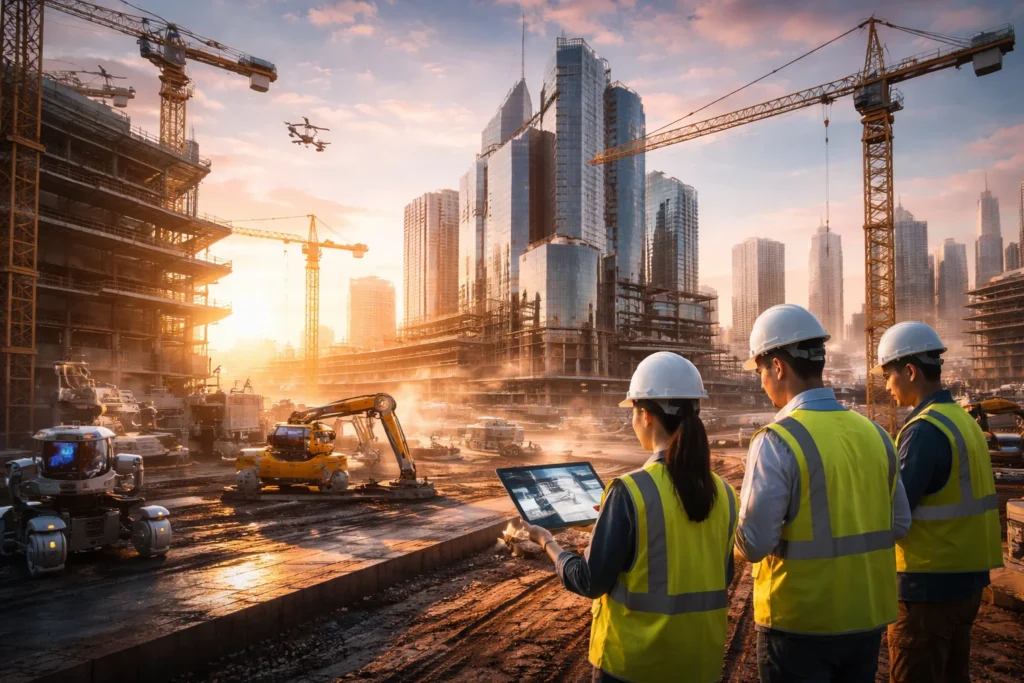
The construction industry is evolving rapidly, driven by technology, sustainability, and the demand for faster project delivery. In 2026, modern construction techniques are not just improving efficiency but also redefining how infrastructure is designed, built, and maintained. Here are the top 5 techniques transforming the industry.
1. Building Information Modeling (BIM)
Building Information Modeling (BIM) has become the backbone of modern construction. It allows engineers, architects, and contractors to create a digital representation of a project before actual construction begins.
With BIM, teams can:
- Visualize the entire project lifecycle
- Detect design conflicts early
- Improve collaboration between stakeholders
This results in reduced errors, lower costs, and faster project completion.
2. Prefabrication and Modular Construction
Prefabrication involves manufacturing building components off-site and assembling them on-site. Modular construction takes this further by creating entire sections of a building in a factory setting.
Key benefits:
- Faster construction timelines
- Better quality control
- Reduced material waste
This method is especially useful for large-scale infrastructure and industrial projects.
3. 3D Printing in Construction
3D printing is revolutionizing how structures are built. From small components to entire buildings, this technology is enabling faster and more cost-effective construction.
Advantages include:
- Reduced labor requirements
- Minimal material wastage
- Ability to create complex designs
In 2026, 3D printing is increasingly used for affordable housing and innovative architectural projects.
4. Smart Construction with IoT and AI
The integration of IoT (Internet of Things) and Artificial Intelligence (AI) is making construction smarter and more efficient.
Applications include:
- Real-time monitoring of construction sites
- Predictive maintenance of equipment
- Enhanced safety through smart sensors
These technologies help in making data-driven decisions, improving productivity, and ensuring worker safety.
5. Sustainable and Green Building Practices
Sustainability is no longer optional—it’s essential. Modern construction techniques focus heavily on reducing environmental impact.
Key practices include:
- Use of eco-friendly materials
- Energy-efficient building designs
- Integration of renewable energy sources like solar panels
Green construction not only benefits the environment but also reduces long-term operational costs.
Conclusion
The future of infrastructure lies in innovation, efficiency, and sustainability. Techniques like BIM, modular construction, 3D printing, smart technologies, and green building practices are shaping the construction landscape in 2026.
Companies that adopt these modern methods will not only deliver projects faster but also ensure higher quality and long-term value.